Noise Barrier Cost per m² in 2026: Price Drivers and Traps
What a noise barrier costs per m² in 2026, from USD 52 FOB for panels to USD 170 installed — plus six traps that turn a cheap quote into an expensive wall.
The number, before the explanation
| Scope | Low | High | What is included |
|---|---|---|---|
| Panel + post, 3 m, FOB China | USD 52/m² | USD 82/m² | Absorptive cassette, H-post, gasket, fasteners |
| Same, CIF Ho Chi Minh or Laem Chabang | USD 58/m² | USD 94/m² | Plus packing, inland haulage, ocean freight |
| Supply and install, Vietnam / Thailand | USD 95/m² | USD 170/m² | Plus foundation, erection, sealing, touch-up |
| Supply and install, Western Europe | EUR 190/m² | EUR 320/m² | Plus CE marking, traffic management, warranty |
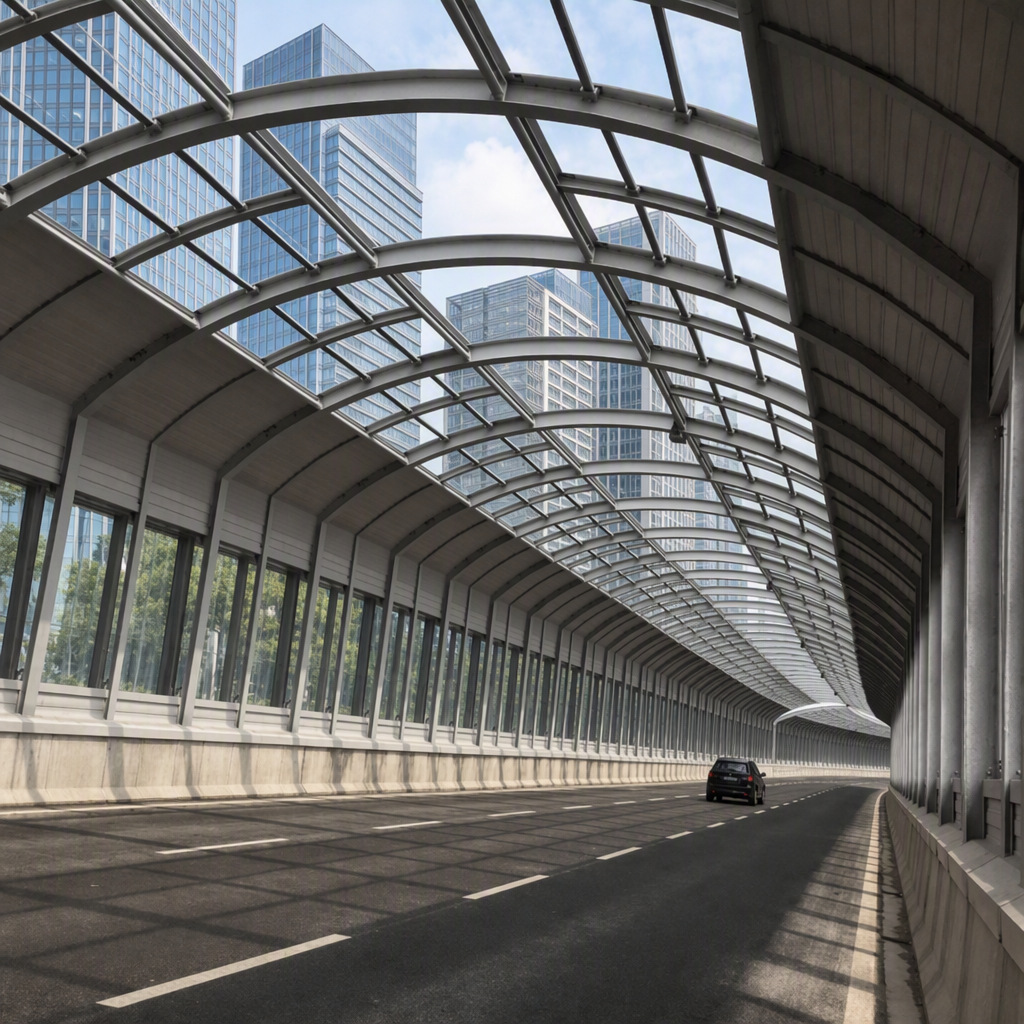
| Fully enclosed, supply and install | USD 380/m² | USD 700/m² | Plus roof structure, ventilation, lighting |
Read those as indicative 2026 ranges for a run-of-mill 3 m absorptive barrier on competent ground, in quantities above 1,000 m². Below 300 m², add 20–35% — the setup cost does not scale down.
The useful question is not "what is the price per square metre". It is "why do three quotes for the same drawing differ by a factor of three". Here is where the money actually goes.
What the panel price is made of
For a 100 mm absorptive cassette, ex-works, at 2026 steel prices:
| Component | Share of panel cost | What moves it |
|---|---|---|
| Steel skins, 0.8 / 0.6 mm | 38–45% | Hot-rolled coil index; skin thickness |
| Mineral wool, 80 kg/m³, 50 mm | 12–16% | Density; fleece wrapping |
| Galvanising | 10–14% | 120 vs 275 g/m²; sheet width |
| Fabrication, welding, perforation | 18–24% | Perforation pattern; automation |
| Edge frame, hardware, gasket | 6–9% | Aluminium vs galvanised |
| Factory overhead and margin | 8–12% | Order size, repeat vs first order |
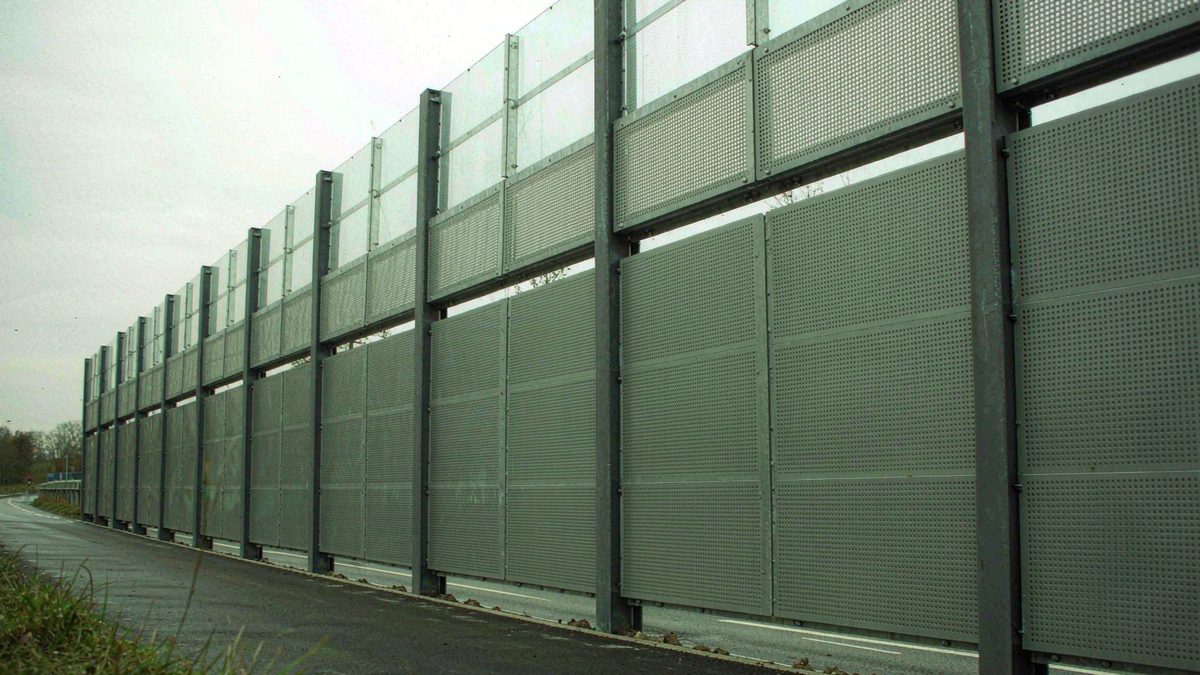
Two of those lines decide most of the spread between a USD 45 panel and a USD 80 panel: skin thickness and zinc mass. A panel built from 0.6/0.5 mm skins with 80 g/m² zinc can be quoted 35–40% below a 0.8/0.6 mm panel at 120 g/m², and it will look identical in a photograph.
Six things that move the project number
1. Height is not linear
Going from 3 m to 4 m adds 33% of panel area, but 40–50% of post cost and 25–35% of foundation cost. At 5 m, the post section steps up again and, on anything but competent ground, the foundation switches from a strip footing to a pile or a wider pad. Budget roughly +45–60% per extra metre on a 3 m baseline, not +33%.
2. Post spacing
Posts are 20–25% of material cost. Widening spacing from 2 m to 4 m halves the post count, but doubles the clear span of every panel: the cassette goes from 100 mm to 150 mm, or needs vertical ribs, and deflection under 1.0 kPa becomes the governing check. The net saving is usually 5–8%, and it disappears the first time a panel oil-cans in a gust. Most highway authorities in Southeast Asia specify 2 m and will not accept 4 m without a wind tunnel report.
3. Transparent ratio
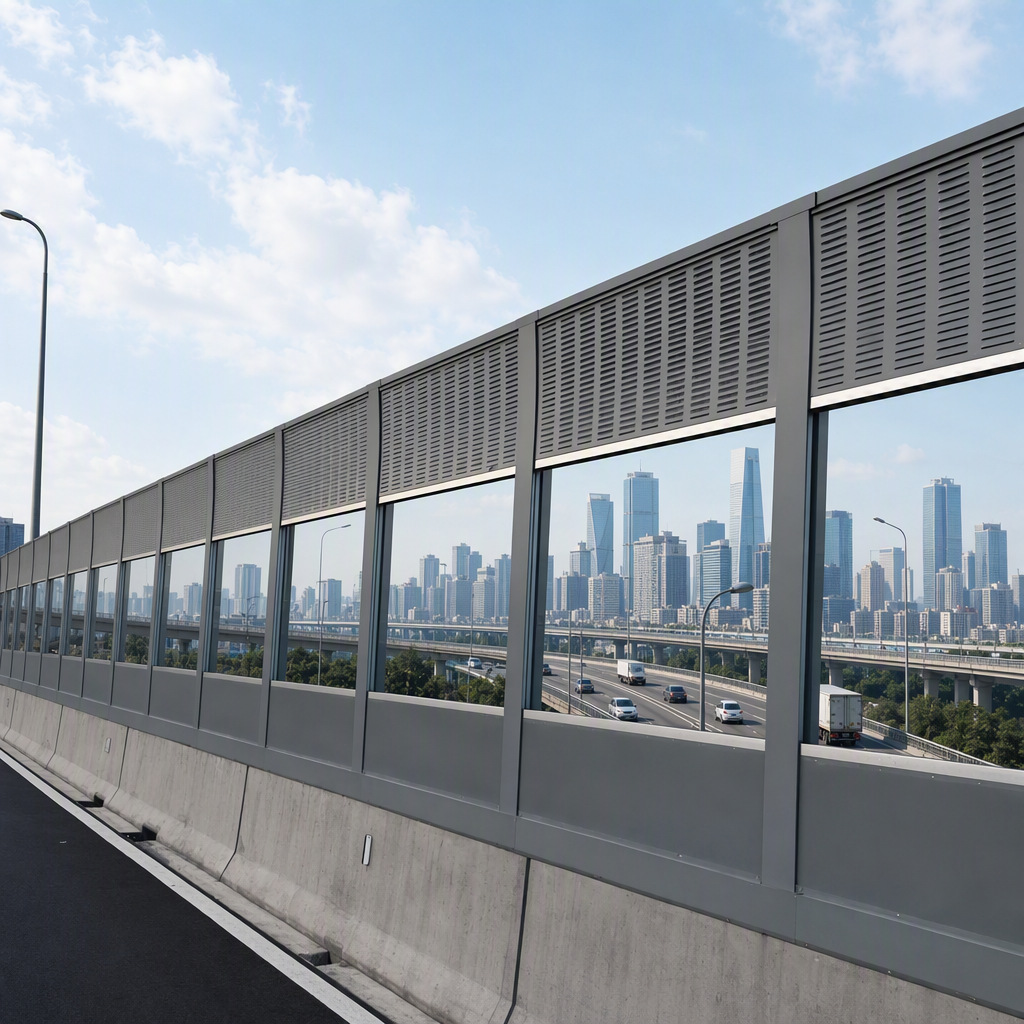
A 12 mm polycarbonate panel costs 3–4 times a steel cassette per square metre. Adding a 1 m transparent band to a 3 m wall — 33% of the area — adds 60–90% to the panel line. Full transparency roughly triples it. This is why the transparent band is usually placed at the top, where it buys daylight and sight lines with the least area, rather than at eye level where it buys the most area.
4. Logistics: you are shipping volume, not weight
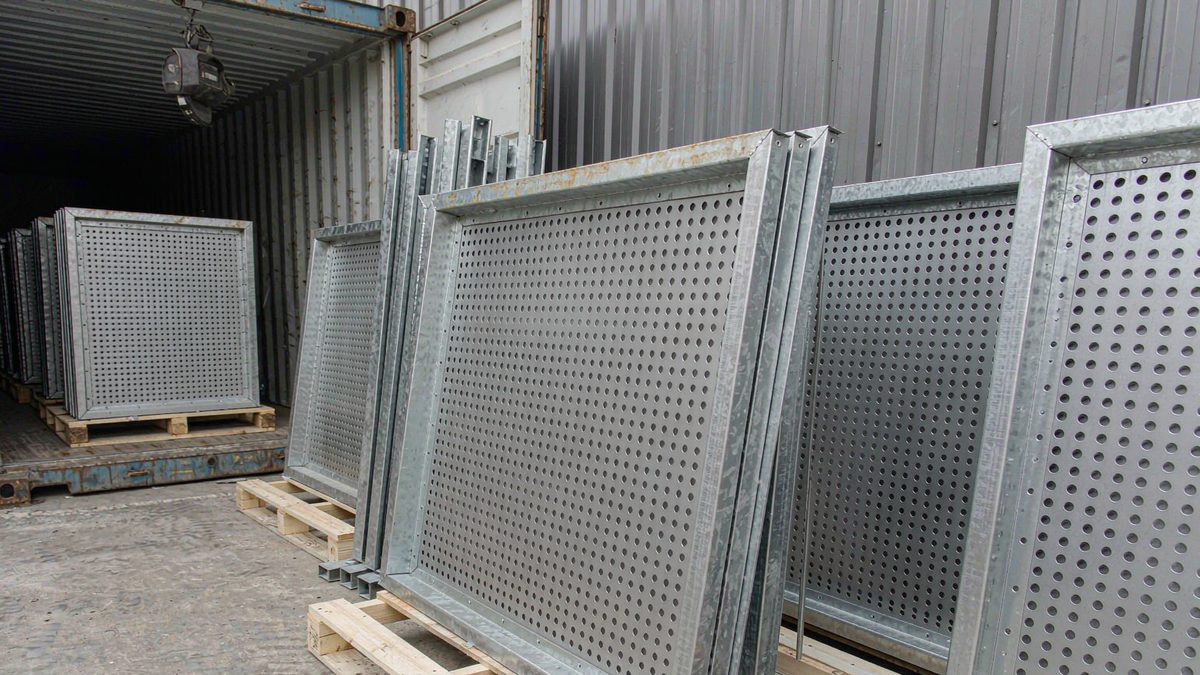
A 100 mm cassette occupies 0.15 m³ for 1.5 m² of wall. A 40 ft high-cube takes 600–800 m², which means a 5,000 m² project is 7–9 containers and a shipping schedule, not a single shipment. Ocean freight adds USD 1–2/m² to Southeast Asia and USD 3–8/m² to Europe at 2026 rates — modest against the panel price, but the double handling at each end does not: unprotected panel edges bent in transit are a recurring claim, and corner protection plus palletisation adds 3–5%.
5. Foundation and erection
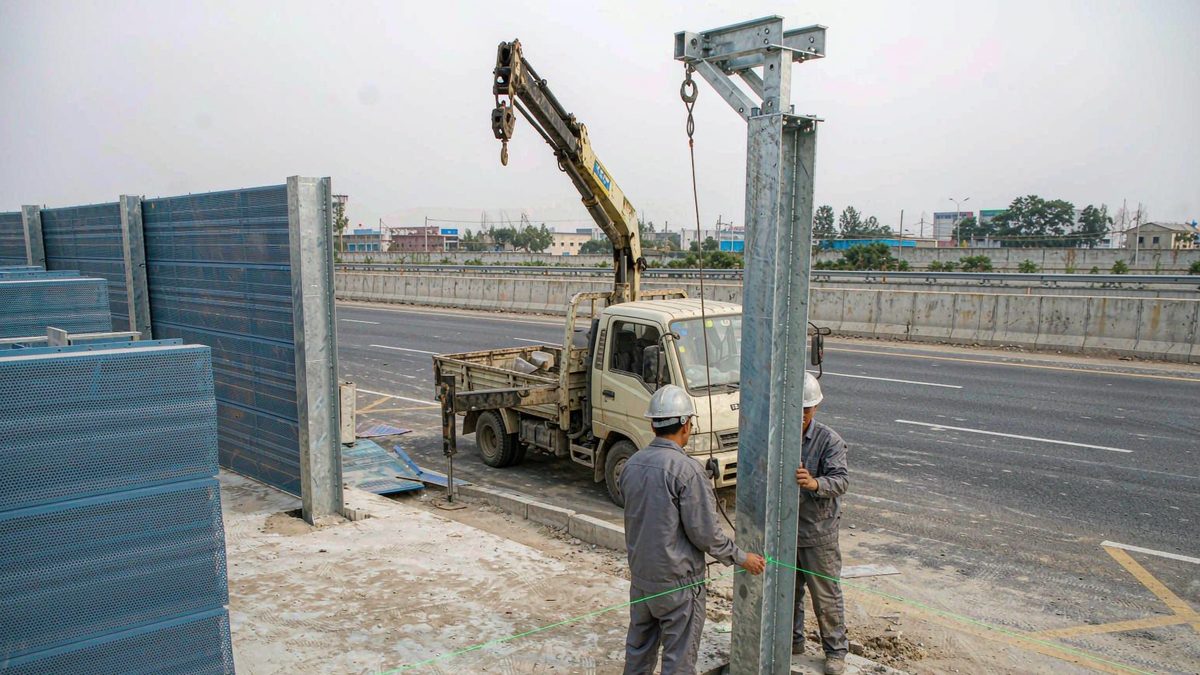
On a supply-and-install contract, foundation and erection are 15–25% of the total on soil, and can exceed 40% on rock, on soft clay, or where the road must stay open. Night work on a live carriageway typically adds 30–50% to the labour line and is usually not optional.
6. Quantity and repetition
The same drawing at 300 m² and at 5,000 m² is not the same product commercially. Setup, jigs, coating colour change, and shipping consolidation all spread over volume. The 300 m² project pays for the factory to think; the 5,000 m² project pays for steel.
The six traps in a low quote
1. "Per square metre of wall" that excludes posts. A quote at USD 48/m² for panels only, against a competitor at USD 68/m² including posts and fasteners, is not 30% cheaper. Posts and hardware are 20–25% of the supply.
2. STC 32 measured on a sample nobody will receive. The rating is usually taken on a 100 mm assembly with 0.8/0.6 skins and a 50 mm core. The delivered panel may be 80 mm with 0.6/0.5 skins. Ask for the test report and check the thickness and skin gauges printed on it against the drawing.
3. Zinc specified at 120, delivered at 60. Coating mass is the easiest thing in the whole product to reduce without changing appearance. Verify by weigh-coating on a 100 × 100 mm coupon, or by magnetic gauge at several points per panel away from edges. A 60 g/m² coating in a coastal environment shows red rust at the cut edges within three to five years.
4. No wind load calculation. At 1.0–1.2 kPa design gust, a panel with 0.5 mm skins and no intermediate rib deflects visibly and fatigues at the fasteners. The acoustic performance drops before the panel fails, because the gaskets open.
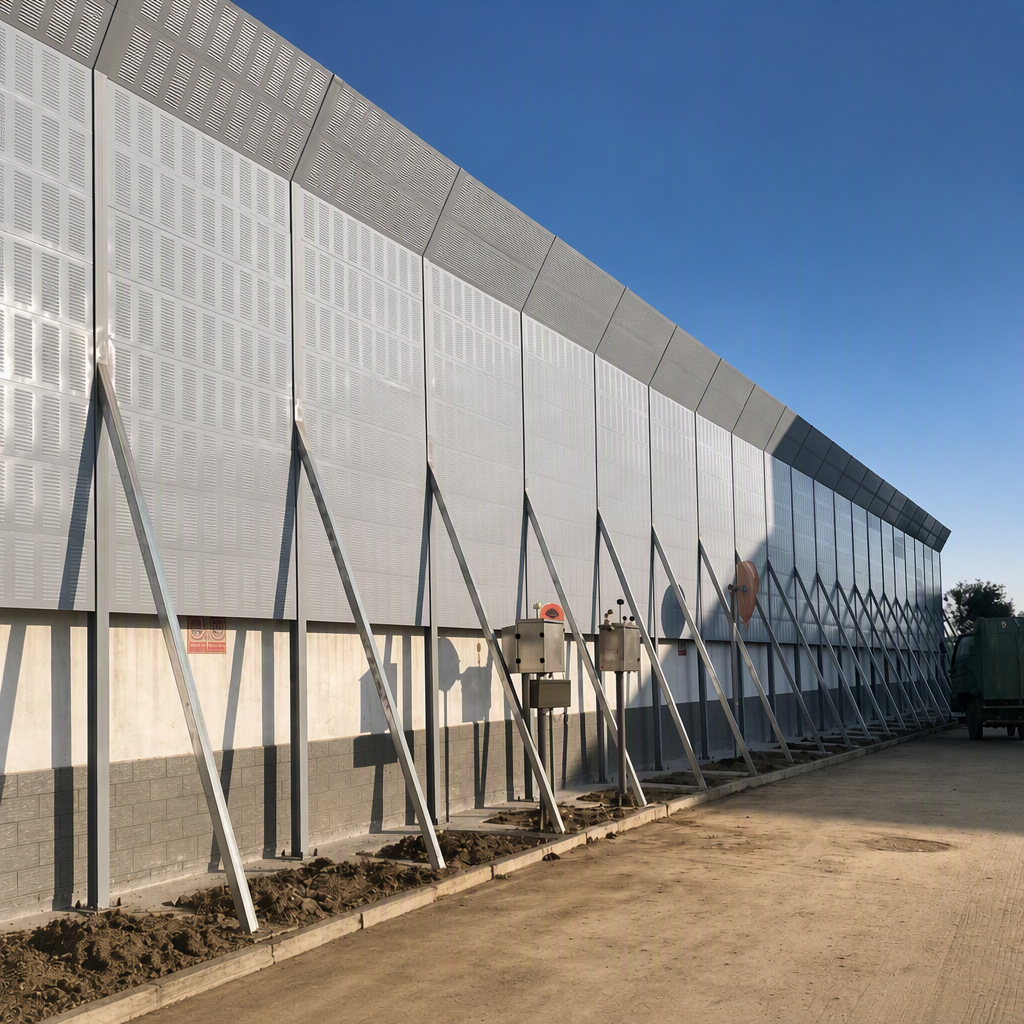
5. Base sealing excluded from scope. It is a small line item and the largest single cause of missed acoustic targets. If the bill of quantities has no line for a continuous base gasket or mortar seal, the target will not be met.
6. Cut edges and drilled holes not touched up. Every hole drilled after galvanising is bare steel. In a humid climate it rusts first, stains the coating below it, and becomes the owner's first complaint.
Life cycle: the 15-year wall and the 25-year wall
| Item | 120 g/m² zinc | 275 g/m² zinc |
|---|---|---|
| Initial supply, 3 m, per m² | USD 62 | USD 70 |
| Repaint or touch-up by year 15 | USD 8–14 | Not required |
| Panel replacement, 25 years | 5–8% of area | 1–2% of area |
| Transparent panels replaced | Year 10–12 | Year 10–12 |
| Indicative 25-year total | USD 78–92 | USD 74–80 |
The gap is small because the premium for extra zinc is small — roughly 8–12% on the panel. What is not small is the cost of access: repainting a barrier beside a live carriageway costs more in traffic management than in paint.
How to get three quotes you can actually compare
Send the same six lines to every supplier, and ask for the same six lines back:
- Wall height, total length, and the section drawing with post spacing.
- Panel build-up: skin thicknesses, core material and density, perforation open area.
- Zinc coating mass per face, and the test method used.
- Design wind load and deflection limit.
- Scope: panels, posts, base plates, anchors, gaskets, base sealing — included or excluded.
- Delivery point and Incoterm, plus whether installation is in scope.
Any supplier who will not answer item 3 or item 4 in writing is telling you something useful.
Where the money is not
Two line items buyers often over-specify, and one they under-specify:
Over-specified: colour. A powder-coated finish adds 6–10% and, on a galvanised substrate in a coastal climate, can fail before the zinc does if the pretreatment is poor. Specify the RAL and the pretreatment (chromate-free conversion coating), not just the colour.
Over-specified: panel length. Non-standard panel lengths add tooling and break the spare-parts logic. A 2 m module with 0.5 m increments covers almost every wall.
Under-specified: the base detail and the tolerance stack. Post spacing ±5 mm, plumb 2 mm/m, base seal continuous. These cost nothing to write and are expensive to retrofit. A 20 mm gap under a 3 m wall costs 2–3 dB(A) — roughly the entire benefit of adding half a metre of height, which would have cost 45–60% more.