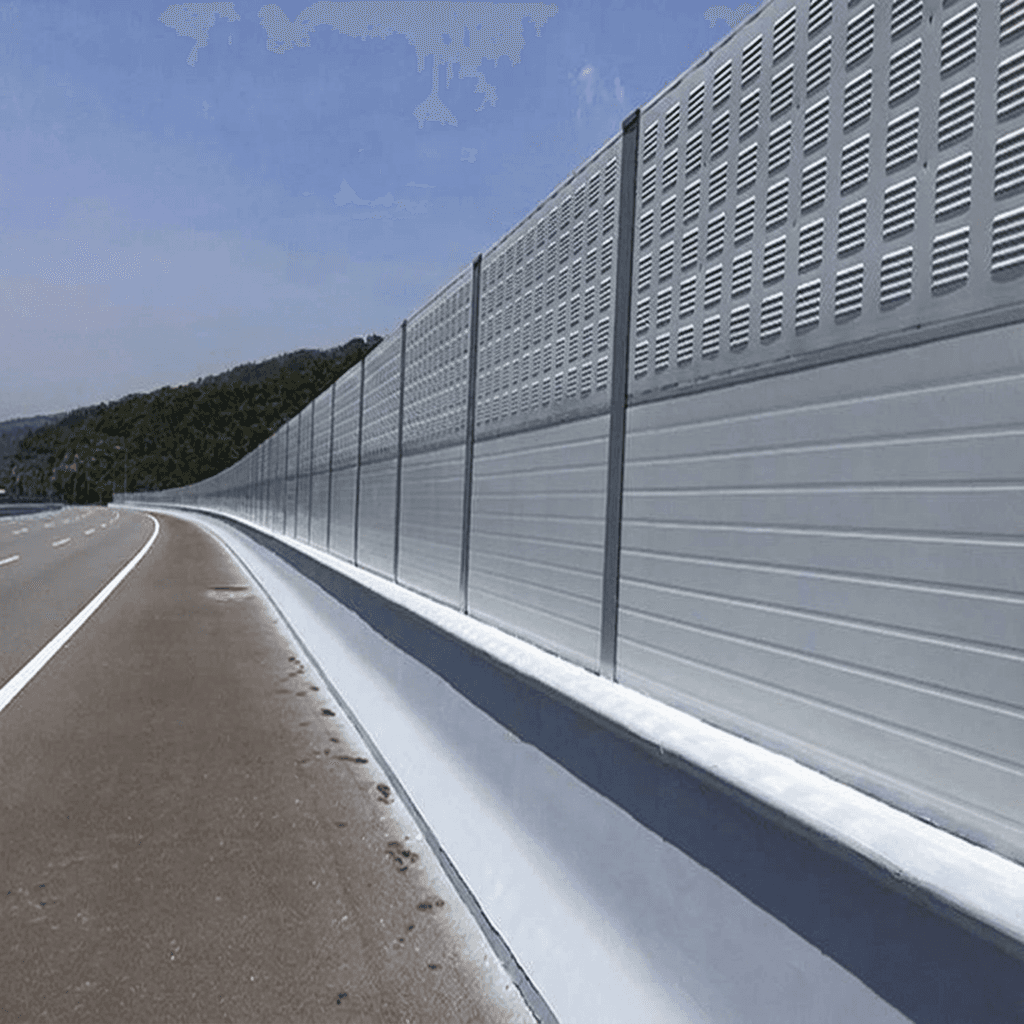
 MOQ: 100
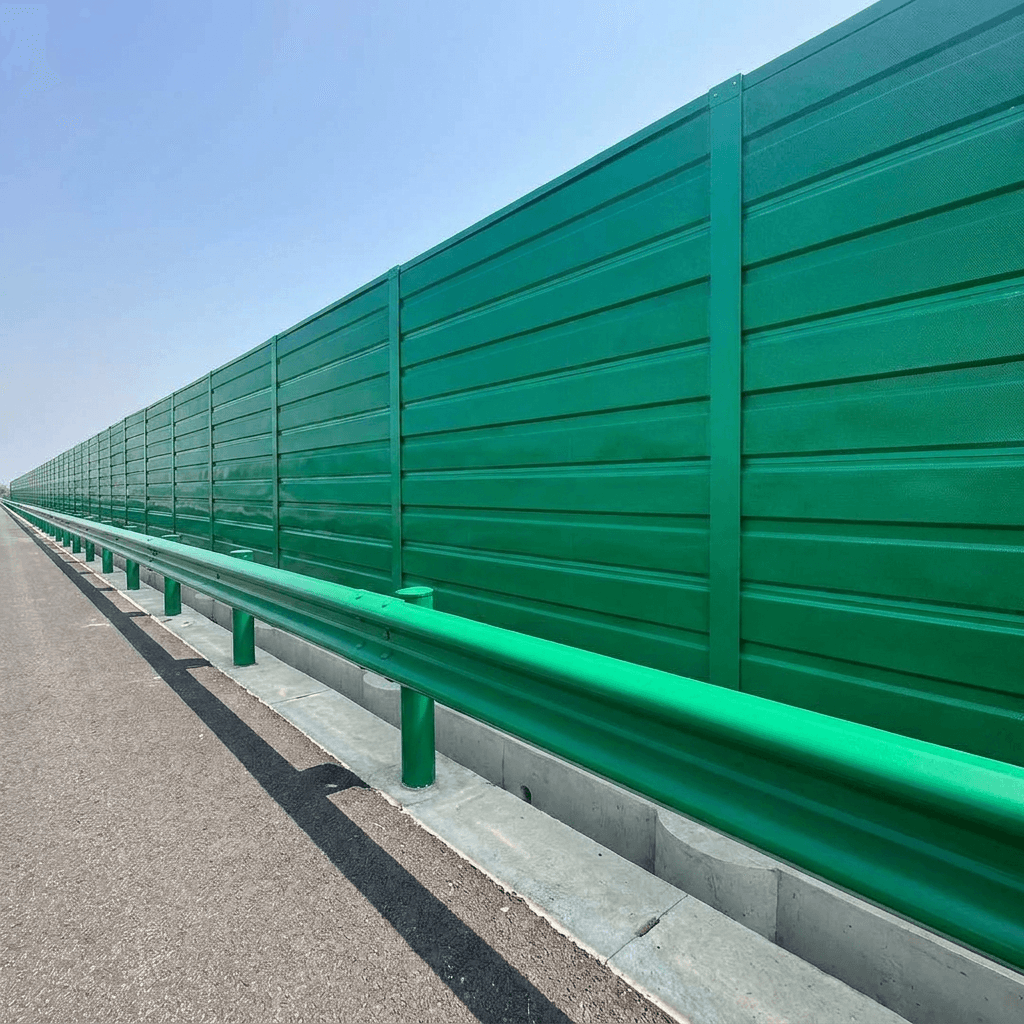
Metal Upright Noise Barrier Vertical Sound Wall Panel
The economical baseline: galvanised absorptive panel between H posts, 80 or 100 mm, 10–20 dB(A). Lowest cost per m² of any barrier type, repairable bay by bay.
$20Details →

Transparent Acrylic & Glass Noise Barrier PC Panel
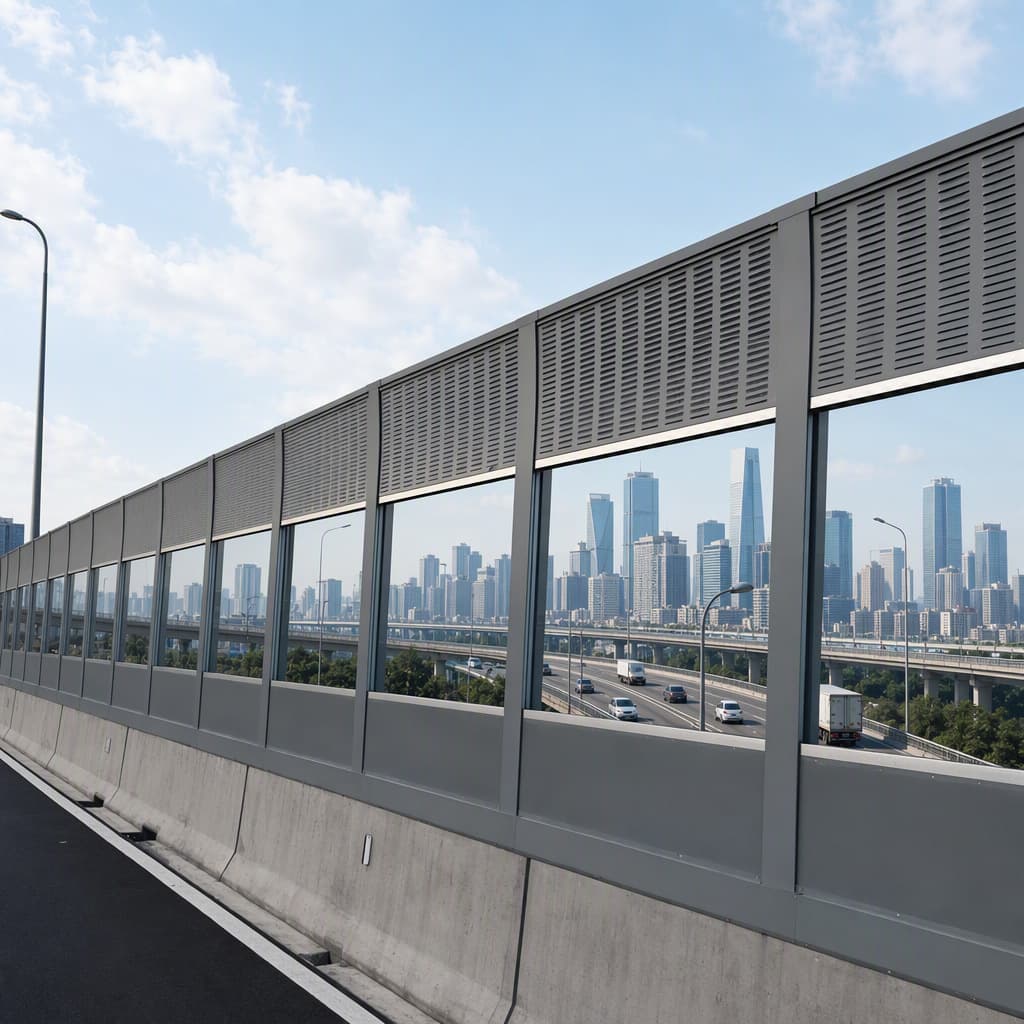
Transparent barrier: 15 mm PC at STC 30, 12–20 kg/m², or 10+10 laminated glass at STC 33. Slotted fixings and UV-coextruded sheet, because thin clamped panels fail.
Transparent barriers are almost never chosen for acoustics. They are chosen because a bridge cannot carry the weight, an interchange must keep its sight lines, or a planning authority will not accept a solid wall in a conservation area.
That makes the material decision the important one: polycarbonate, acrylic or laminated glass behave very differently after five summers of sun and twenty thousand vehicles.
| Parameter | Value |
|---|---|
| Panel height | 2.0–3.0 m |
| Panel thickness | 15 mm PC / 10 + 10 mm laminated glass |
| Light transmission | 89% (PC), 92% (glass) |
| STC | 30–33 |
| Insertion loss | 15–25 dB(A), site dependent |
| Fire rating | B1 (PC) / A (glass) |
| Frame | Aluminium or galvanised steel |
| Standards | GB/T 19889, ISO 717 |
Bridges and viaducts, urban arterials, scenic routes, rail transit, and any location where the barrier must not read as a wall.
A transparent panel is acoustically reflective. It performs acceptably on the protected side and throws the energy back across the road — typically 2–3 dB worse on the opposite side. On a dual carriageway or a street with buildings opposite, use a transparent band at the top and absorptive panels below, rather than full-height glazing. It is cheaper, quieter, and it still delivers the daylight and the view.
Lead time 20–30 days. FOB Tianjin, CIF, or DDP.
Every site listed here shares three constraints: continuous traffic or machine load, wind pressure set by local code, and an acoustic target the authority will measure after installation. Panels are selected by insertion loss, NRC and wind load rating — panel size alone tells you nothing about whether the wall will pass.
Transparent barrier: 15 mm PC at STC 30, 12–20 kg/m², or 10+10 laminated glass at STC 33. Slotted fixings and UV-coextruded sheet, because thin clamped panels fail.
| Panel Height | 2.0-3.0m |
|---|---|
| Panel Thickness | 15mm PC / 10+10mm laminated glass |
| Light Transmission | 89% (PC), 92% (glass) |
| STC | 30-33 |
| Insertion Loss | 15-25 dB(A) |
| Fire Rating | B1 (PC) / A (glass) |
| Standard | GB/T 19889, ISO 717 |
FOB Tianjin, per m2
Loading figures are typical for standard export packing; the final loading plan is confirmed with the quotation.
Trial orders of 50 m² are accepted for noise barrier panels.
Test reports available on request from our sales manager.
FOB Tianjin. Indicative price for reference only; final quotation valid 30 days from issue.
Factory-direct price · FOB / CIF · Reply within 24 hours
MOQ: 100The economical baseline: galvanised absorptive panel between H posts, 80 or 100 mm, 10–20 dB(A). Lowest cost per m² of any barrier type, repairable bay by bay.
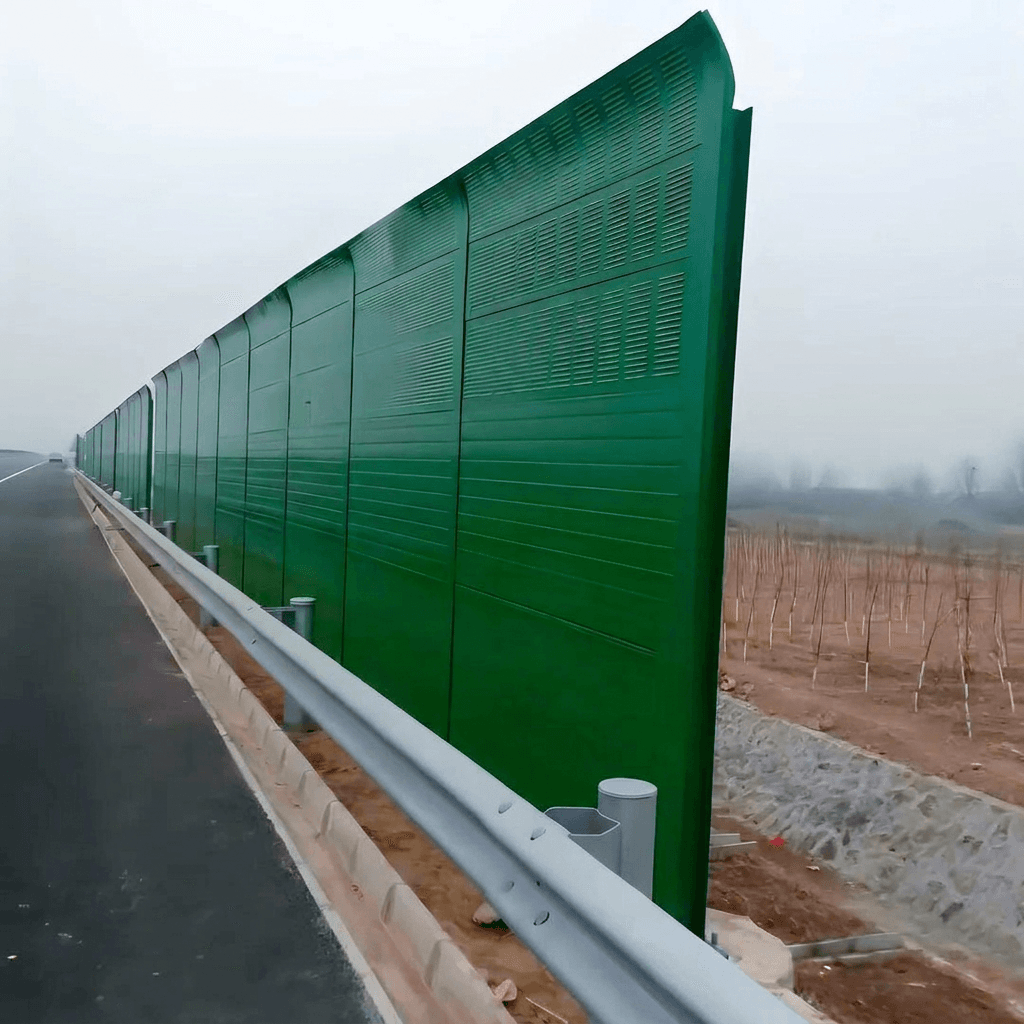 MOQ: 100
Curved-top barrier: 1.5–2.5 dB(A) more than a straight wall of the same height, for 8–12% more panel area instead of 33%. Made for capped heights.
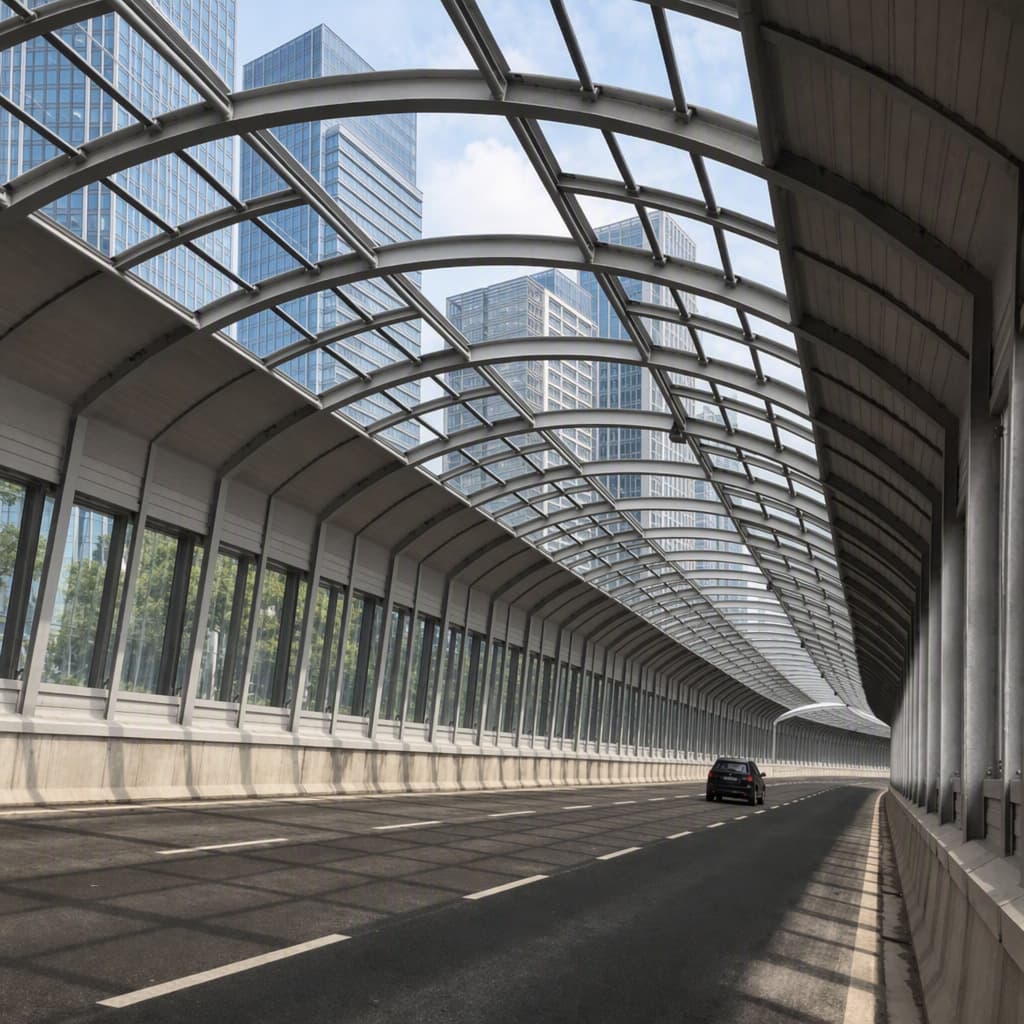 MOQ: 200
Full acoustic enclosure: 4–6 m walls, 8–20 m span, louvered roof with a PC daylight band. 20–30 dB(A) where a wall cannot get past the sixth floor.
 MOQ: 100★ Featured
3.0 m absorptive highway barrier: 100 mm cassette, NRC 0.85, STC 32, 10–15 dB(A) at the receiver. The base seal decides whether you get it.