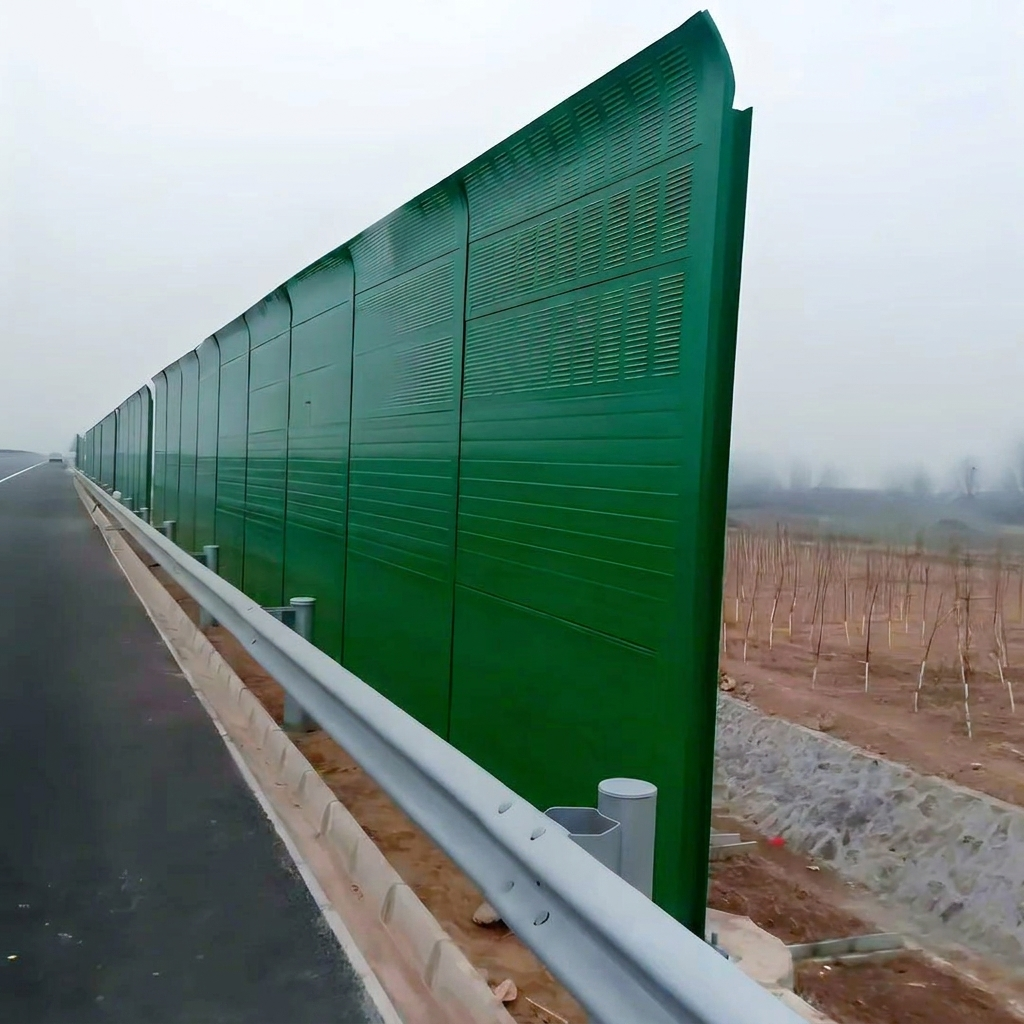
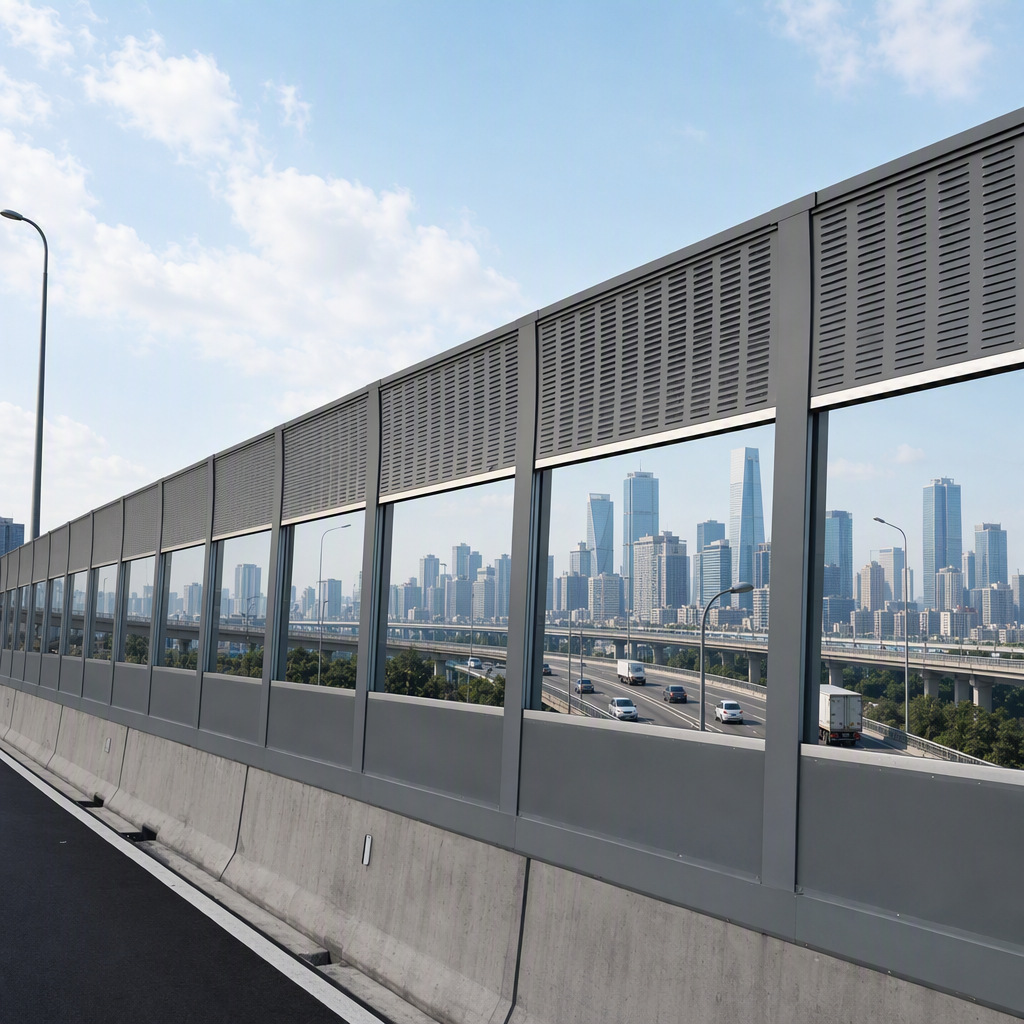
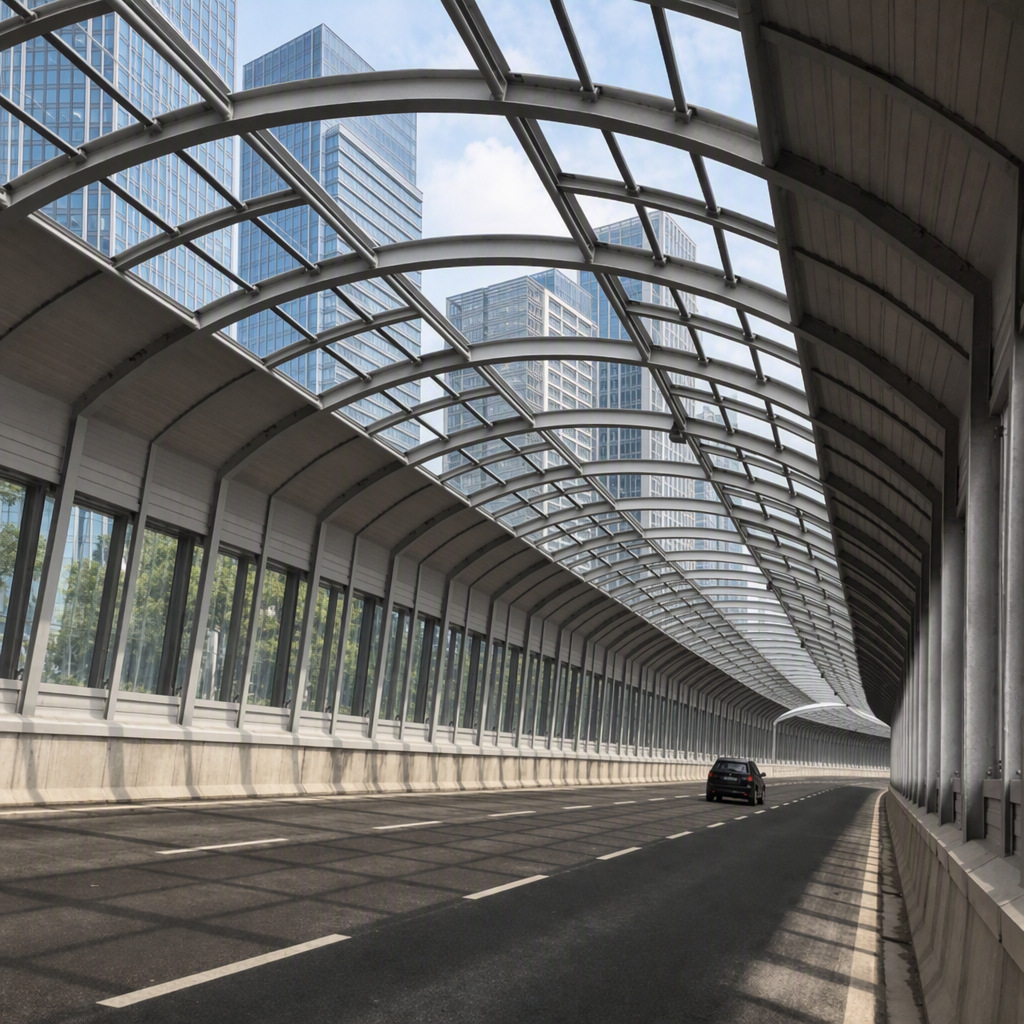
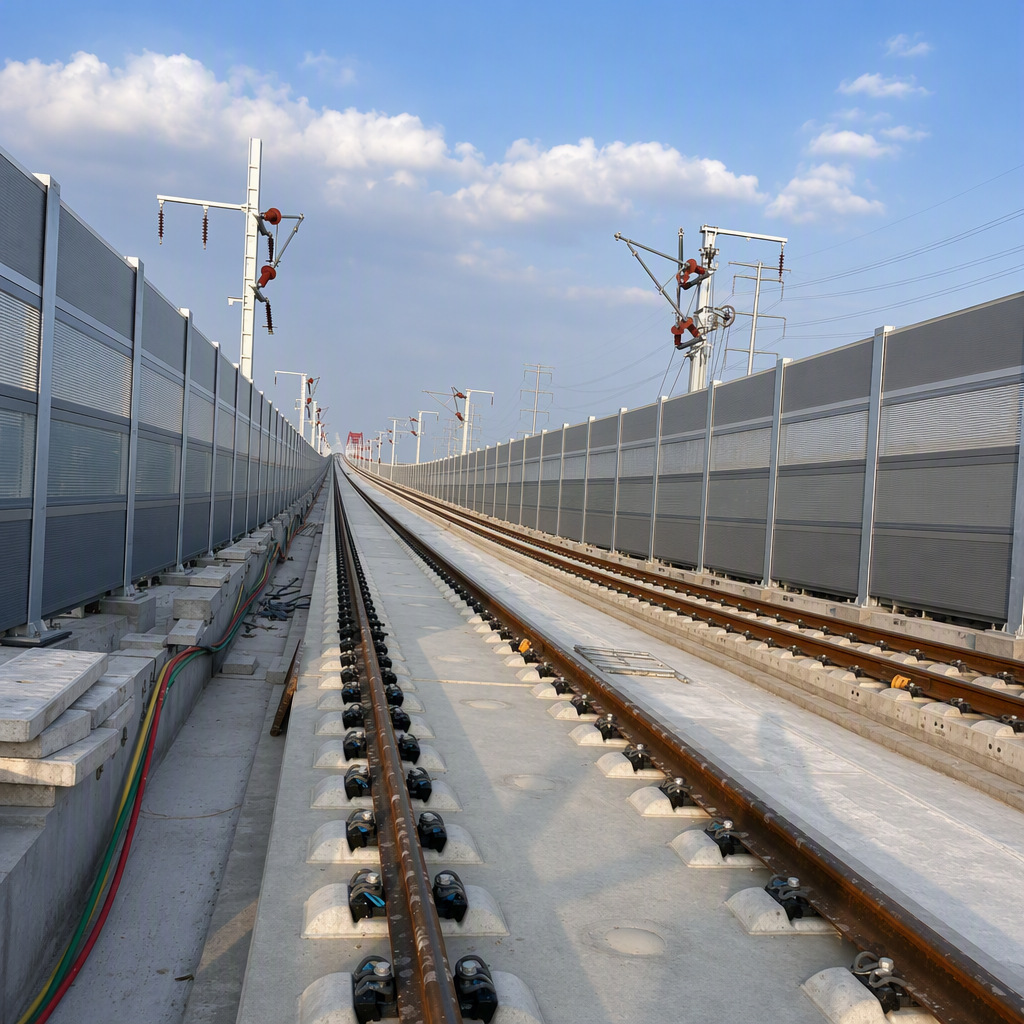
Rail transit noise barriers are specialized acoustic structures designed for the unique noise characteristics of rail transportation. Unlike highway barriers, rail barriers must handle wheel-rail interaction noise (especially on curves), braking squeal, engine/motor noise, and the air-pulse effect of high-speed trains in tunnels.
Rail Noise Characteristics
Rail noise differs from road traffic noise:
- Wheel-Rail Squeal: High-frequency (2000-8000 Hz) on curves — extremely annoying. Requires high-NRC barriers.
- Impact Noise: At rail joints and switches — impulsive, broadband.
- Engine/Motor Noise: Continuous low-frequency rumble from propulsion.
- Aerodynamic Noise: At >200 km/h, air turbulence dominates — broadband hiss.
- Ground-Borne Vibration: Low-frequency (20-100 Hz) transmitted through ground — barriers don't help but resilient mounts do.
Specialized Design
- Vibration-Resistant Mount: Panels mounted on rubber isolation pads — prevents structure-borne vibration transmission through posts
- Higher NRC Required: NRC 0.90 (vs 0.85 for highway) — absorbs more high-frequency squeal
- Curved-Top Design: Optional J-shaped or Y-shaped top improves diffraction edge effectiveness by 2-3 dB
- Transparent Sections: PC (polycarbonate) panels in station areas for visibility — NRC 0.10 but STC 30
- Anti-Graffiti: Optional anti-graffiti coating on station-area panels
Key Advantages
- Rail-Specific: Tuned for wheel-rail noise spectrum. Standard highway barriers insufficient.
- Vibration Isolated: Rubber mounts prevent rail vibration from transmitting through barrier structure.

 MOQ: 100