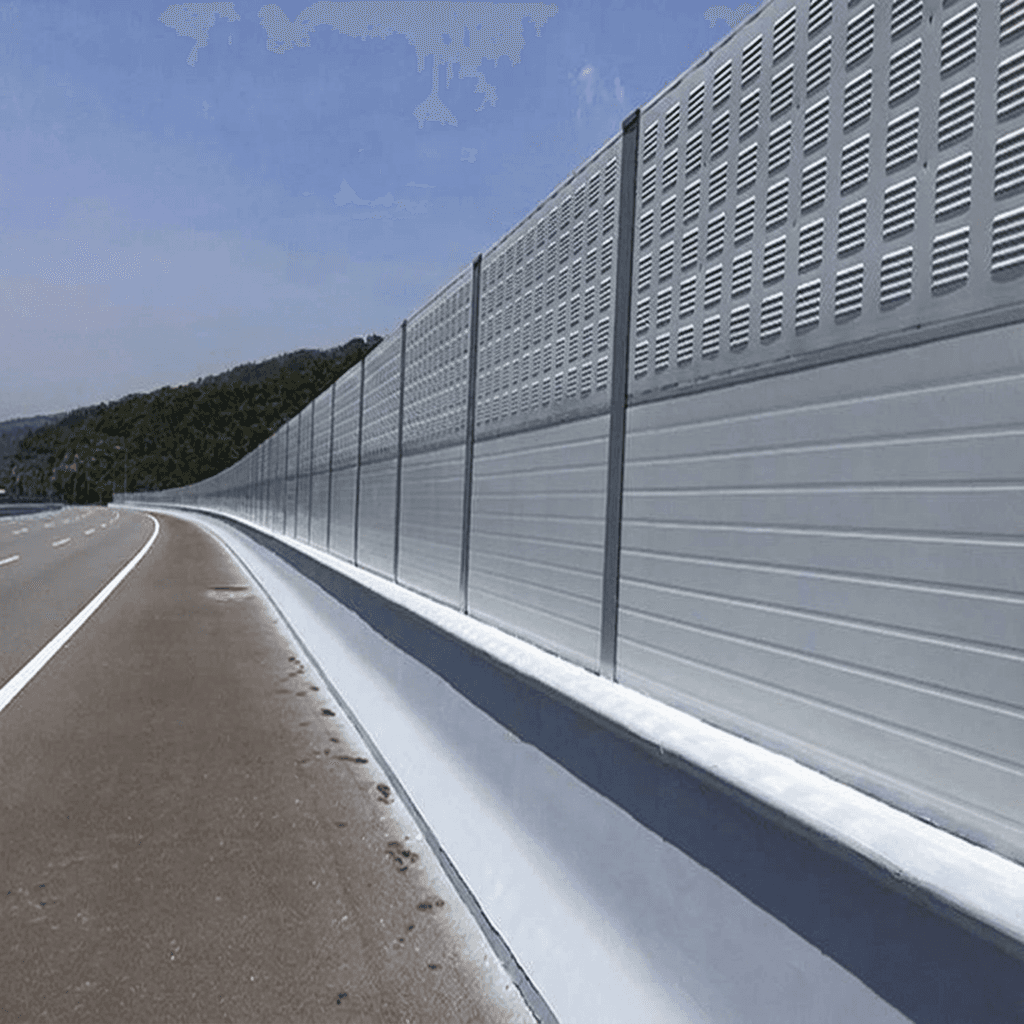
 MOQ: 100
Metal Upright Noise Barrier Vertical Sound Wall Panel
The economical baseline: galvanised absorptive panel between H posts, 80 or 100 mm, 10–20 dB(A). Lowest cost per m² of any barrier type, repairable bay by bay.
$20Details →

Metal Bent Curved Noise Barrier Arc Acoustic Panel
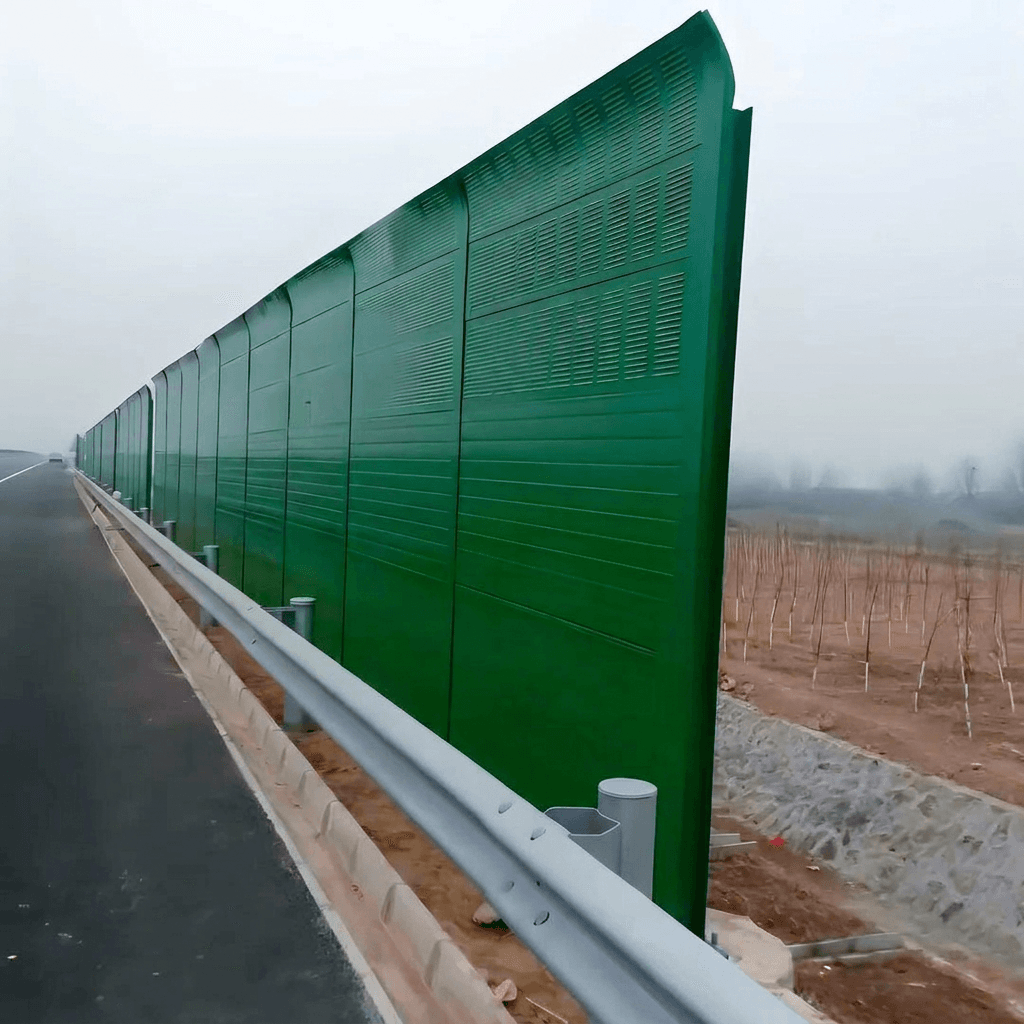
Curved-top barrier: 1.5–2.5 dB(A) more than a straight wall of the same height, for 8–12% more panel area instead of 33%. Made for capped heights.
Diffraction over the top edge is what limits a barrier. Sound bends over the top and down into the shadow zone, and past about 4 m the cost of adding height rises faster than the benefit. Bending the top towards the road is the cheaper way to lengthen that path.
A one-metre radius bend at 45–60° typically recovers 1.5–2.5 dB(A) against a straight wall of the same height, for 8–12% more panel area instead of the 33% a metre of extra height would cost.
| Parameter | Value |
|---|---|
| Panel height | 3.0–4.0 m (including curve) |
| Curve radius | 500–1,000 mm |
| Bend angle | 45–60° |
| Panel width | 0.5 m |
| Panel thickness | 80–100 mm |
| Face | 0.8 mm perforated galvanised steel |
| Core | 50 mm mineral wool, 80 kg/m³ |
| NRC / STC | 0.85 / 32 |
| Insertion loss | 15–25 dB(A) with the curve, site dependent |
| Zinc coating | ≥120 g/m² |
| Standards | GB/T 19889, ISO 717 |
Expressways with a height restriction, elevated roads, urban interchanges, railway lines through built-up areas, and bridges where the parapet height is fixed.
A bend of 15–20° barely changes the path length; it looks architectural and delivers a few tenths of a decibel. And a curved top specified without rechecking the post will deflect visibly at the top of a 4 m assembly, which opens the panel joints and undoes the acoustic gain. Ask for the deflection calculation, not just the radius.
Lead time 15–25 days. FOB Tianjin, CIF, or DDP.
Every site listed here shares three constraints: continuous traffic or machine load, wind pressure set by local code, and an acoustic target the authority will measure after installation. Panels are selected by insertion loss, NRC and wind load rating — panel size alone tells you nothing about whether the wall will pass.
Curved-top barrier: 1.5–2.5 dB(A) more than a straight wall of the same height, for 8–12% more panel area instead of 33%. Made for capped heights.
| Panel Height | 3.0-4.0m |
|---|---|
| Curve Radius | 500-1000mm |
| Panel Width | 0.5m |
| Panel Thickness | 80-100mm |
| Outer Skin | 0.8mm perforated galvanized steel |
| Core | 50mm mineral wool 80 kg/m³ |
| NRC | 0.85 |
| STC | 32 |
| Insertion Loss | 15-25 dB(A) |
| Zinc Coating | ≥120g/m² |
| Standard | GB/T 19889, ISO 717 |
FOB Tianjin, per m2
Loading figures are typical for standard export packing; the final loading plan is confirmed with the quotation.
Trial orders of 50 m² are accepted for noise barrier panels.
Test reports available on request from our sales manager.
FOB Tianjin. Indicative price for reference only; final quotation valid 30 days from issue.
Factory-direct price · FOB / CIF · Reply within 24 hours
MOQ: 100The economical baseline: galvanised absorptive panel between H posts, 80 or 100 mm, 10–20 dB(A). Lowest cost per m² of any barrier type, repairable bay by bay.
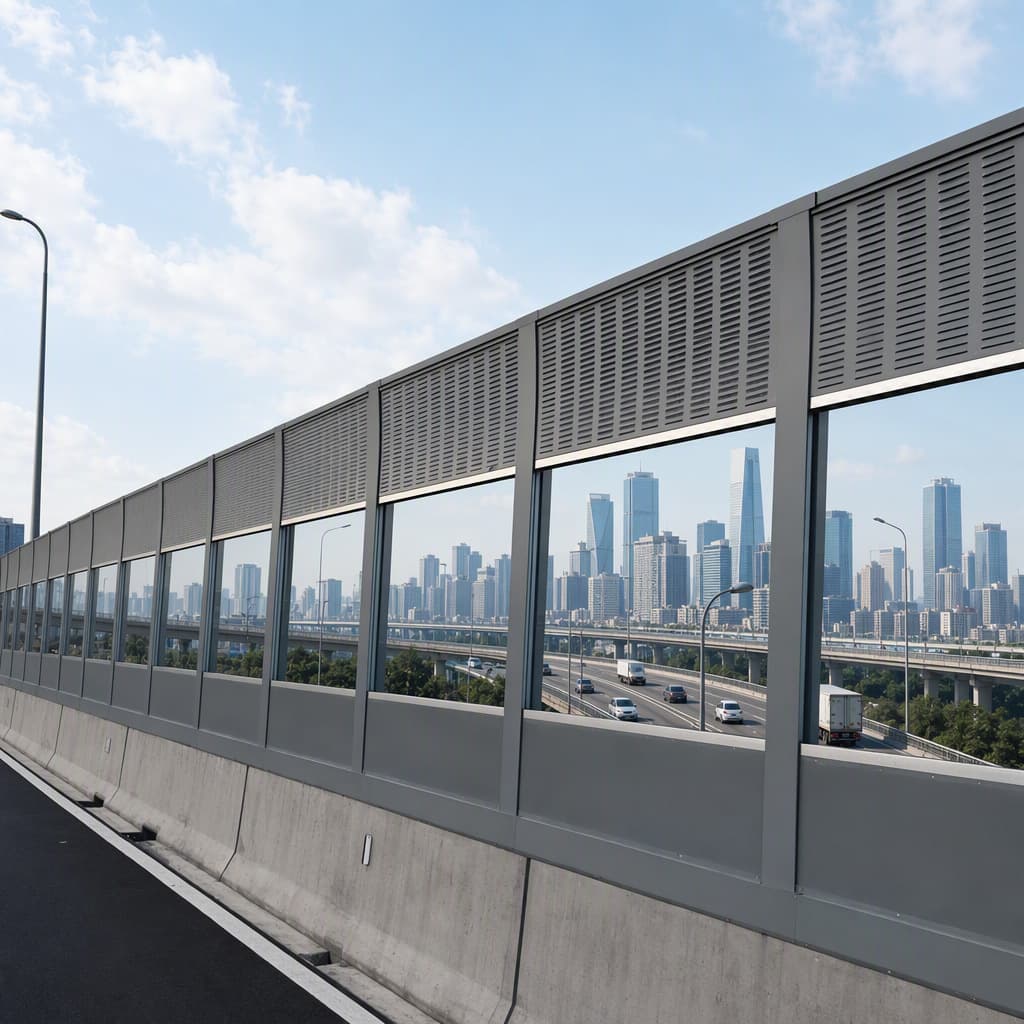 MOQ: 80
Transparent barrier: 15 mm PC at STC 30, 12–20 kg/m², or 10+10 laminated glass at STC 33. Slotted fixings and UV-coextruded sheet, because thin clamped panels fail.
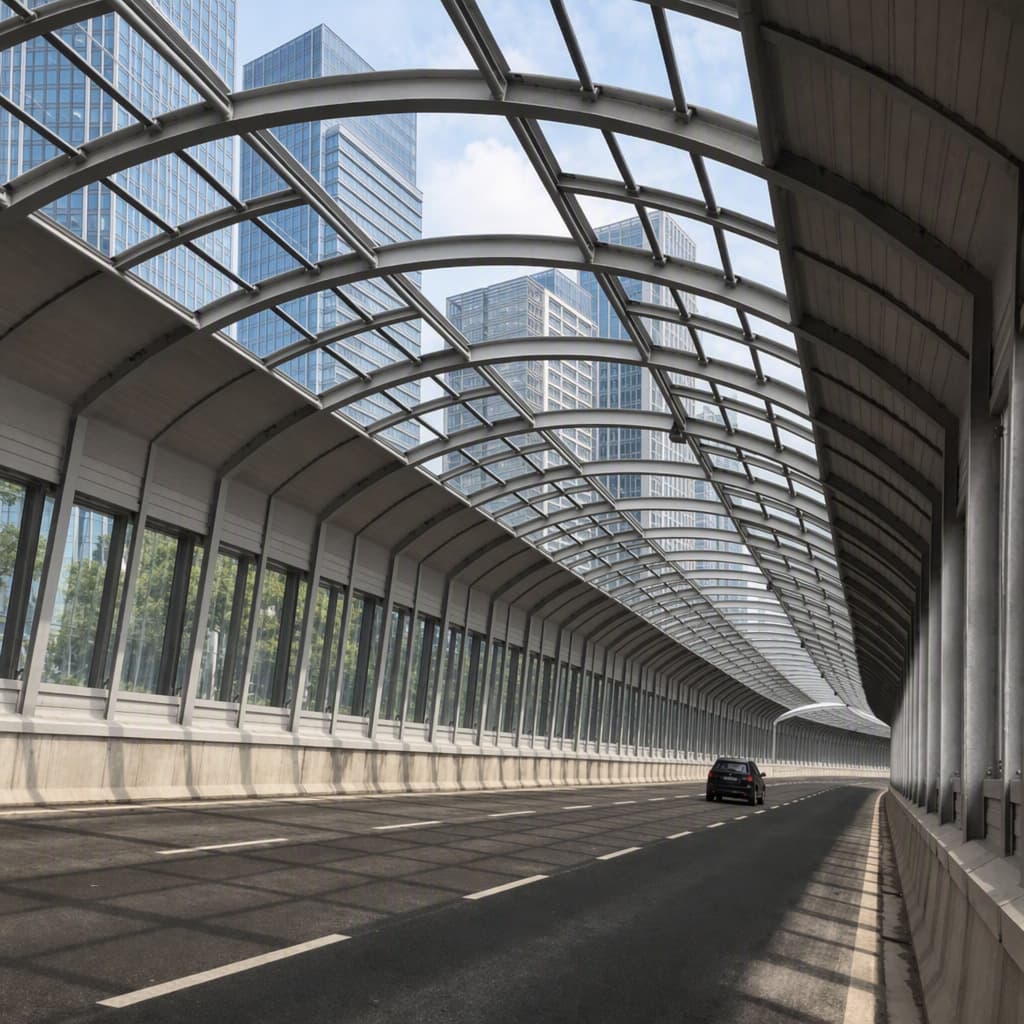 MOQ: 200
Full acoustic enclosure: 4–6 m walls, 8–20 m span, louvered roof with a PC daylight band. 20–30 dB(A) where a wall cannot get past the sixth floor.
 MOQ: 100★ Featured
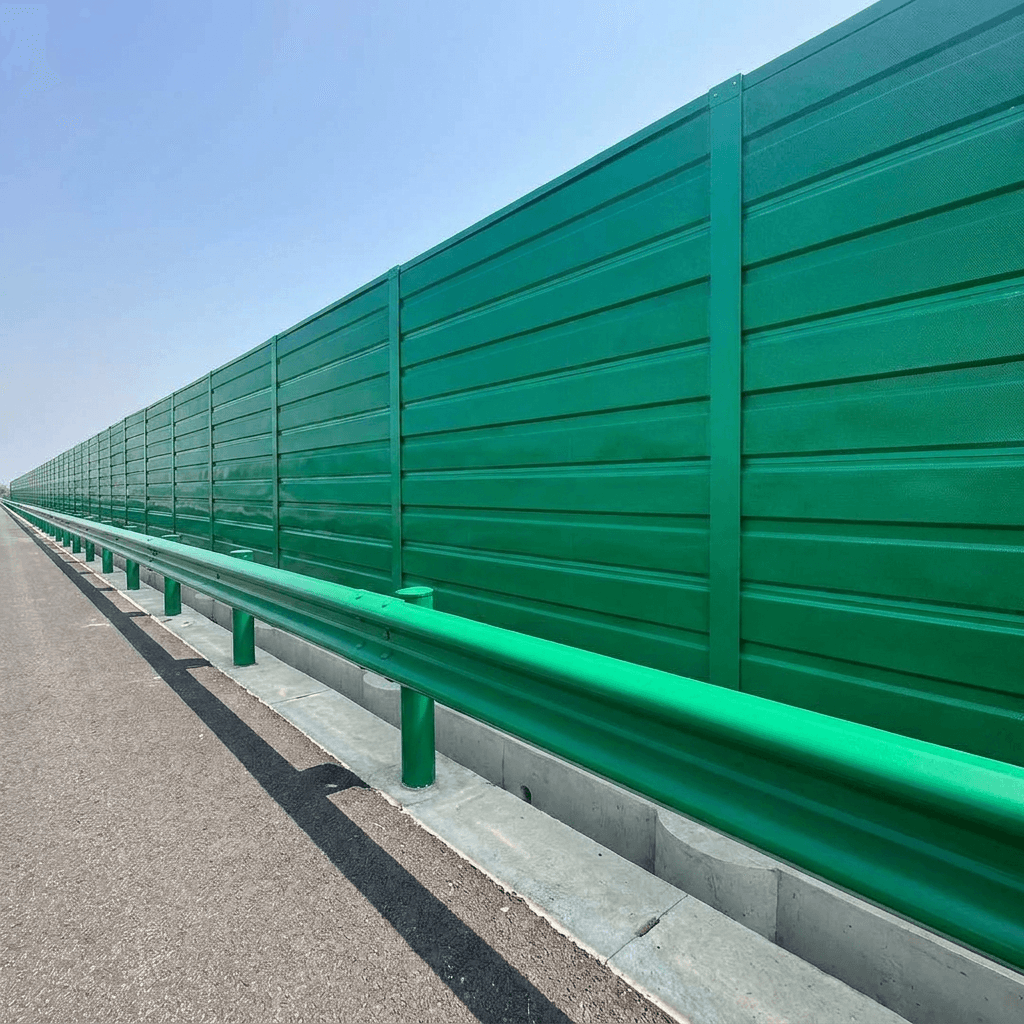
3.0 m absorptive highway barrier: 100 mm cassette, NRC 0.85, STC 32, 10–15 dB(A) at the receiver. The base seal decides whether you get it.